
It is a fascinating aspect of the human body that an issue in one small area of the spine can lead to debilitating pain that radiates all the way down the leg. When this happens, it is often due to a condition called sciatica, and it is one of the most common reasons people seek out care. Here at Anderson Family Chiropractic in Pleasant Hill, Iowa, Dr. Mark Anderson, DC, and the entire team encourage patients to believe that relief is possible and that taking a proactive, science-backed approach is the key to regaining a healthy, active life. We want to empower you to explore new parts of yourself that aren't defined by pain, and that starts with understanding this condition and the effective, non-invasive treatments available.
What Exactly Is Sciatica?
Sciatica is not actually a diagnosis itself but is rather a term used to describe a set of symptoms caused by the compression or irritation of the sciatic nerve, the longest and largest single nerve in your entire body. The sciatic nerve originates in the lower back, runs through the buttocks, and extends down the back of each leg, eventually branching out to the feet. When something presses on or inflames this nerve, the typical result is pain, often described as a searing, shooting, or electric shock sensation, that travels along the nerve's path. This pain is usually felt on only one side of the body. You might also experience numbness, tingling, or even muscle weakness in the affected leg or foot. For many, the pain can be so intense that it makes simple actions like sitting, walking, or standing nearly impossible.
Chiropractic-Treatable Causes Of Sciatica
While many things can cause sciatica, a significant number of cases are related to structural issues in the lower back and pelvis that your Pleasant Hill, IA, chiropractor is perfectly suited to care for.
- Herniated or Bulging Discs: The intervertebral discs cushion the bones of your spine. If the soft, gel-like center of a disc pushes out through a tear in the outer layer, it can press directly on the adjacent sciatic nerve root, causing inflammation and pain.
- Spinal Stenosis: This involves the narrowing of the spinal canal, the space through which the spinal cord and nerves pass. This narrowing puts pressure on the sciatic nerve.
- Degenerative Disc Disease: As we age, the discs can naturally wear down and lose fluid. This can lead to bone spurs and instability that irritate the nerve roots.
- Piriformis Syndrome: The piriformis is a small muscle located deep in the buttock. The sciatic nerve runs either underneath or through this muscle. If the piriformis muscle becomes tight, inflamed, or goes into spasm (often due to injury or overuse), it can compress the sciatic nerve, causing symptoms identical to true sciatica.
Benefits Of Non-Invasive Chiropractic Treatments
When dealing with chronic radiating pain, it can be tempting to reach for painkillers or consider invasive procedures, but we strongly believe in trying conservative, non-drug options first. Chiropractic care offers a path to long-lasting relief by correcting the mechanical problem.
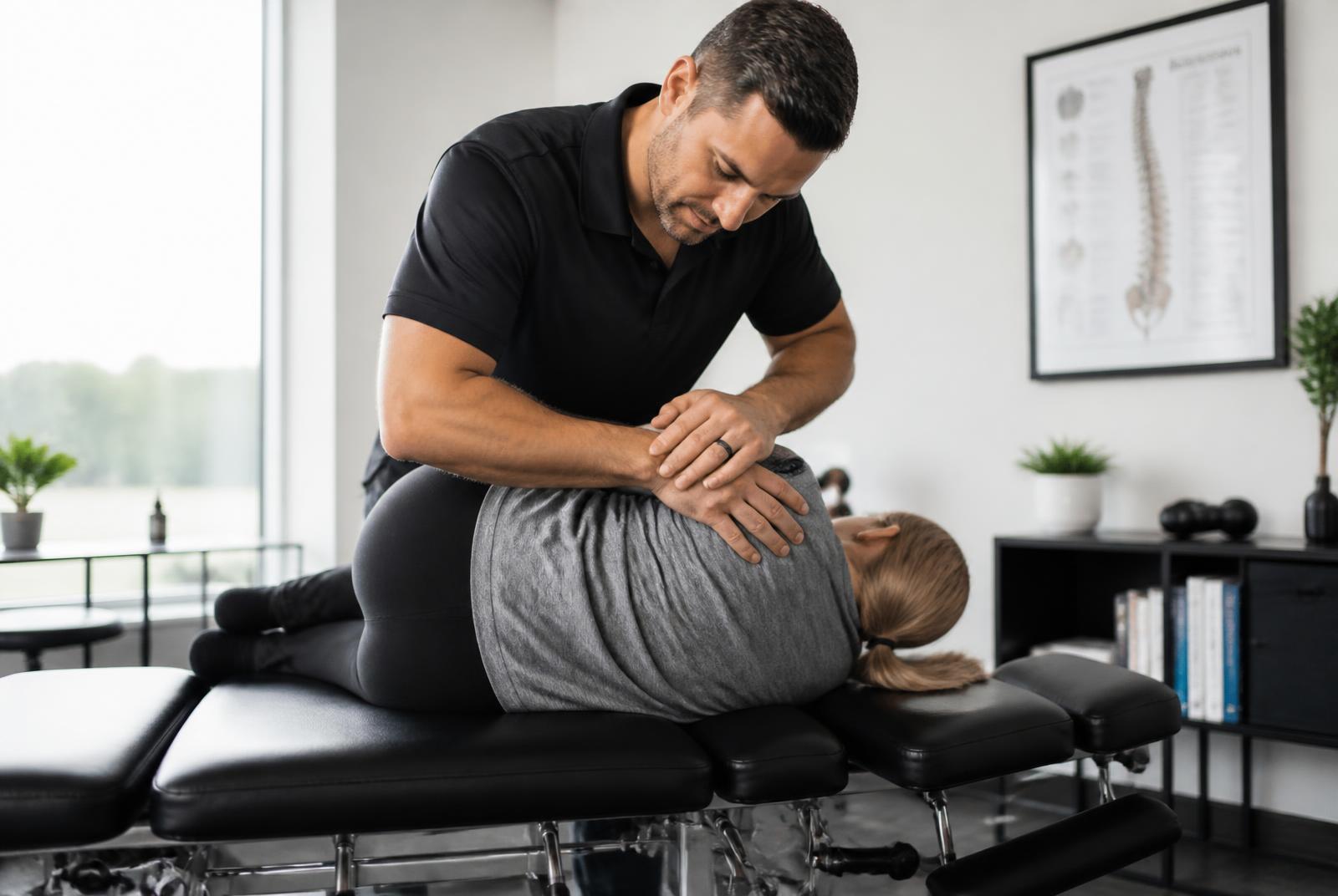
- Chiropractic Adjustments: Dr. Anderson uses precise spinal adjustments to restore proper alignment to the vertebrae and pelvis. By correcting subluxations (misalignments), pressure is taken off the nerve roots, which reduces inflammation and allows the body to begin its natural healing process. This often provides immediate, noticeable relief, leading to increased mobility and reduced pain.
- Ergonomic Evaluations and Guidance: Pain often results from daily habits that place undue stress on the spine. We don't just treat the pain; we help you make informed choices about how you live. For example, simply raising your computer monitor or changing the way you sit could significantly reduce the stress contributing to your sciatica.
- Targeted Stretching and Exercise: A crucial part of long-term recovery is learning how to strengthen supporting muscles and increase flexibility. You will receive instruction on stretches and exercises designed to stabilize your lower back, strengthen your core, and specifically relieve tension in muscles like the piriformis. Adopting a personalized routine empowers you to manage your condition and actively participate in your recovery.
Help Yourself Heal with Chiropractic Care
The key to overcoming sciatica is understanding that you do not have to live with the pain. Dr. Mark Anderson, DC, and the team at Anderson Family Chiropractic in Pleasant Hill, IA, are dedicated to using knowledgeable, science-based, and personalized care to help you move past your limitations. We encourage you to look on the bright side and take a conscious, positive step toward relief. If you are ready to explore a non-invasive path to recovery, please call us to schedule your consultation. You can reach the practice by phone at (515) 266-6090.